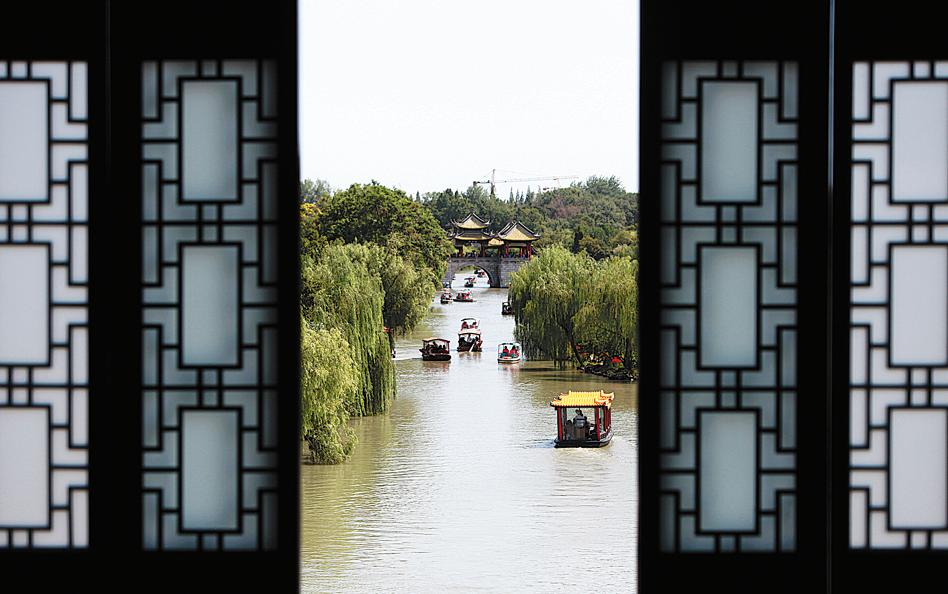
The Grand Canal
Introduction
The Grand Canal, the world's longest man-made waterway, is a monumental engineering feat that stretches over 1,794 kilometers across central and eastern China. This vast canal system extends from Beijing in the north to Zhejiang province in the south, intersecting with numerous provincial-level regions and linking five major river basins. Constructed in sections beginning in the 5th century BC, the canal was fully realized as a unified communication route by the Sui Dynasty (581-618) in the 7th century AD. It played a crucial role in Chinese history, serving as a vital artery for economic, social, and cultural exchanges between the north and south of the country. Designated as a UNESCO World Heritage Site in 2014, the Grand Canal continues to be a significant cultural and historical landmark that reflects the ingenuity and perseverance of ancient Chinese civilization.
History
The origins of the Grand Canal can be traced back to the Spring and Autumn Period (770-476 BC), when its earliest sections were established. During the Sui Dynasty, Emperor Yang Guang recognized the need for a comprehensive transportation network to facilitate the movement of goods, people, and military forces across the unified nation. In 605 AD, he initiated the ambitious project to construct the Grand Canal, which was completed in 611 AD, connecting the Yellow River with the Yangtze River. This massive undertaking marked the creation of the world's largest civil engineering project prior to the Industrial Revolution.
The canal reached its zenith during the Yuan Dynasty (1271-1368), forming a unified inland navigation network of over 2,000 kilometers, linking the major river basins in China. It played a vital role in ensuring China's economic prosperity, stability, and cultural exchanges throughout history. Despite the decline of its transportation functions in modern times, the Grand Canal remains an enduring symbol of China's historical and cultural heritage.
Structure
The Grand Canal is an intricate network of artificial waterways, comprising ten main sections: Tongjiqu River, Weihe River, Huaiyang Segment, Jiangnan Segment, East Segment of Zhejiang province, Tonghui River, North Segment, South Segment, Huitong River Segment, and the Middle River Segment. Its construction involved sophisticated hydraulic engineering techniques, including the construction of dykes, weirs, and bridges. The canal's architecture showcases the technical prowess of ancient Chinese civilization, with innovative uses of materials such as stone, rammed-earth, clay, and straw to adapt to the diverse and complex natural environments it traverses.
Significance
Historically, the Grand Canal served as a crucial lifeline for China's economy, facilitating the transport of agricultural produce, especially grain, from the fertile southern regions to the northern capitals. Its existence supported the Caoyun system, an imperial monopoly on grain transportation, which was a cornerstone of the Chinese peasant economy and a factor of stability for the empire. Additionally, the canal was instrumental in cultural exchanges and the diffusion of ideas and innovations across regions. Today, it is recognized as an exemplar of hydraulic engineering and a testament to human creativity and adaptability in overcoming natural challenges.
Major Attractions
Along the Grand Canal, several key attractions highlight its historical and cultural significance.
One of the attractions is the Yaowan Ancient Town in Xinyi, Jiangsu province. Nestled between the Zhong Canal and Luoma Lake, this ancient town was historically a bustling wharf since the late Ming Dynasty (1368-1644) becoming a vibrant trade hub for grain, salt, silk, and porcelain. Its rich cultural interplay is evident in the town's diverse architecture and cuisine, making it a compelling destination for history enthusiasts.
Another noteworthy attraction is Yangzhou, a city synonymous with ancient Chinese poetry. Located at the starting point of the Grand Canal's Hangou section, Yangzhou has inspired countless poets, including Li Bai and Su Dongpo. These literary figures immortalized the city's beauty and prosperity through their verses during the Tang (618-907) and Song (960-1279) dynasties. Visitors today can explore Yangzhou's cultural landmarks, reflecting its significant historical and literary heritage.
In Huai'an, the Liyunhe Cultural Corridor offers a vivid insight into the canal's historical importance. The corridor includes the Qingjiang Sluice, a vital structure from the Ming Dynasty, which played a crucial role in regulating water levels for the Caoyun system—China's tribute grain transportation network. The Site of Caoyun Governor's Mansion in Huai'an stands as a testament to the city's role as a transportation hub and administrative center during the Ming and Qing (1644-1911) dynasties. The nearby China Caoyun Museum further enriches visitors' understanding of the canal's economic and cultural impacts.
Hangzhou, at the canal's southern end, boasts the Gongchen Bridge—an iconic symbol of the Grand Canal's architectural ingenuity. The Hangzhou section is lined with historical sites and scenic spots, offering picturesque views and cultural experiences. Visitors can enjoy a leisurely boat trip or explore nearby historic streets, immersing themselves in the rich tapestry of Jiangnan water town culture.
The city of Suzhou, often referred to as the "Venice of the East", boasts picturesque waterways and has been a center for jade carving since the Qing Dynasty.
The Grand Canal Forest Park in Tongzhou district in Beijing provides a lush green space for leisure activities while preserving the ecological integrity of the canal's northernmost tip.
Each of these attractions offers a unique glimpse into the multifaceted history of the Grand Canal, providing both locals and tourists with an opportunity to connect with China's illustrious past.








